


When kids play outdoors in winter, keeping their heads warm is essential. Without proper headgear, they lose 7–10% of body heat, risking discomfort or even frostbite. The right choice depends on weather, activity, and fit:
- Insulated Hats: Best for everyday warmth, with fleece linings and ear coverage. Prices range from £4.00 to £25.00.
- Balaclavas: Ideal for extreme cold and full-face protection, especially during skiing or snowboarding. Cost: £28.00–£35.00.
- Thermal Headbands: Lightweight and perfect for high-energy activities like cycling, keeping ears warm without overheating. Available for £9.99–£25.00.
- Ski Helmets with Insulation: Combine safety and warmth for sledging or skiing. Look for CE EN1077-certified helmets with fleece linings.
Quick Tip: For active kids, moisture-wicking fabrics like merino wool or polyester are key to staying dry and warm. Avoid cotton, as it traps moisture and cools the skin. Always ensure a snug fit for safety and comfort.
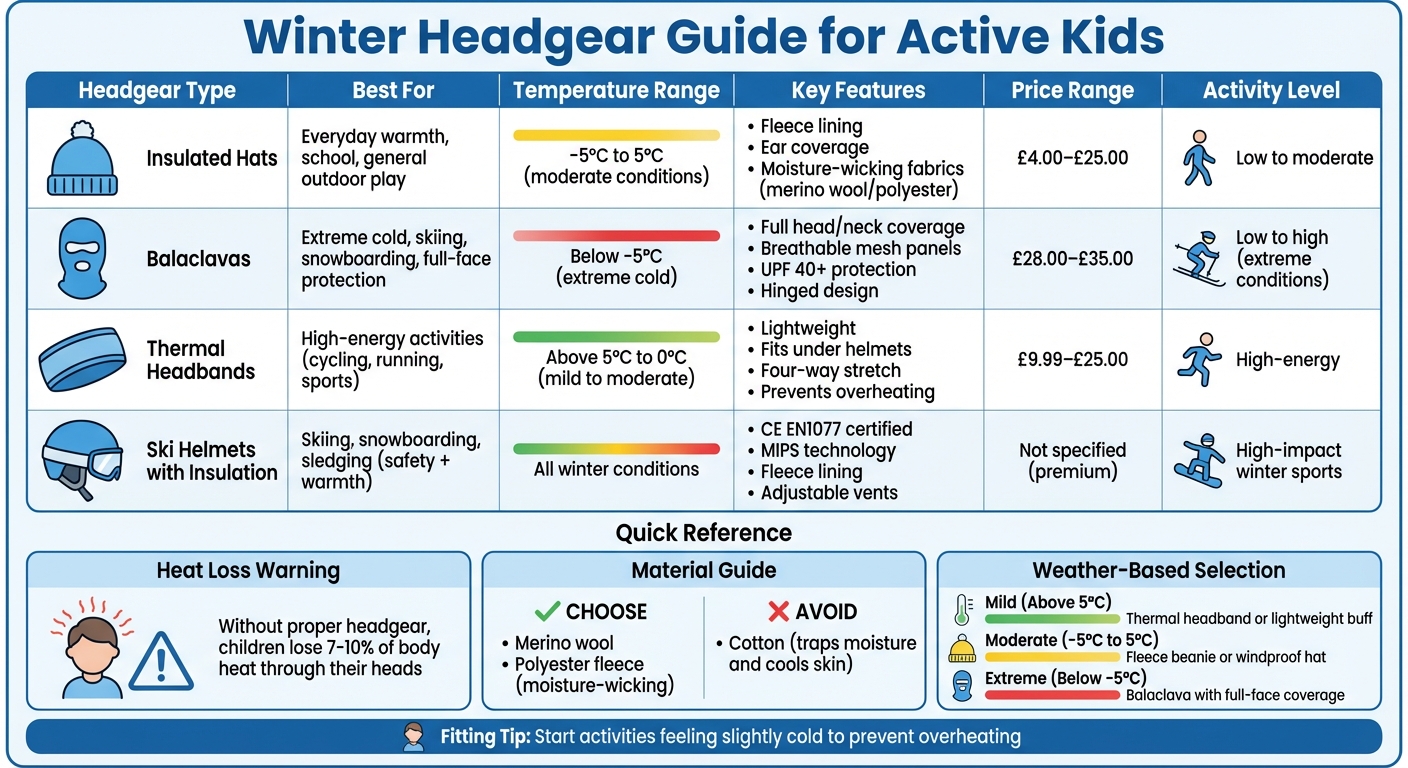
Winter Headgear Comparison Guide for Active Children
Insulated Winter Hats for Heat Retention
Did you know the head is one of the main areas where body heat escapes? Without proper insulation, a significant amount of warmth can be lost, even if the rest of the body is well-covered. This is especially important for children, as a bare head can lead to quicker overall cooling, making insulated hats a must-have for winter outings.
Insulated hats are an essential part of the layered approach to winter dressing. They help trap heat close to the head while shielding against wind and moisture. The type of hat you choose should match your child’s activity level and the weather conditions. For high-energy activities like cycling or running, lightweight thermal headbands or thin, moisture-wicking hats work best to prevent overheating. On the other hand, for very cold or low-activity situations, trapper or aviator hats that cover the ears, neck, and chin are ideal. For everyday use, a simple beanie offers plenty of warmth without the need for added technical features suited to sports.
Key Features to Look For
When selecting a winter hat, pay attention to features that enhance both warmth and comfort. A fleece lining, for instance, provides extra insulation and eliminates the itchiness often caused by rough wool exteriors. Many beanies and trapper hats come with this soft interior, making them more comfortable for extended wear. Look for hats with folded brims or ear flaps to ensure full ear coverage, which is essential for keeping warm in cold conditions.
If your child will be in windy environments, hats made from windproof materials are a game-changer. While many knit hats are breathable, those with wind-stopping membranes can make a noticeable difference in maintaining warmth during strong gusts or outdoor activities. For active kids, moisture-wicking fabrics like polyester or merino wool are key, as they pull sweat away from the skin and reduce the risk of getting chilled.
A secure fit is equally important, especially for kids who are always on the move. Hats should fit snugly but comfortably. Styles like chullos with chin ties or trapper hats with chin straps help keep them in place during vigorous play. For activities requiring helmets, such as cycling or skiing, thin merino beanies or low-profile skull caps can be worn underneath without compromising the helmet’s fit or safety. If you’re opting for fleece hats, make sure they’re sized correctly, as fleece tends to stretch less than knitted wool or acrylic.
Selecting the Right Style
Choosing the right hat style ensures your child stays warm and comfortable while matching the activity at hand. Beanies are a go-to option for everyday activities like walking to school or playing in the garden. Their simple design, often enhanced with folded brims for extra ear warmth, makes them practical and versatile. However, for more extreme conditions or high-speed sports, standard beanies may lack the extra features needed. For layering during active pursuits, plain beanies are often a better choice than bobble hats.
For colder days, trapper or aviator hats offer excellent coverage. These styles protect the ears and jawline with fur or shearling linings, and their chin fasteners keep them securely in place. They’re perfect for low-activity winter fun like sledging or building snowmen, where kids might not generate as much body heat. If your child is out in the evening or on a ski slope, hats in bright or neon colours can improve visibility and safety. In extremely cold weather, layering a thin skull cap under a thicker, windproof hat or hood adds an extra layer of warmth.
When it comes to cost, kids’ technical beanies typically range from £18.00 to £25.00. Specialised insulated styles with features like earflaps may be slightly more expensive. Materials also matter: merino wool is breathable and naturally odour-resistant, while synthetic polyester is durable and quick-drying, making it a practical choice for many families. By considering these factors, you can find a hat that keeps your child warm and comfortable during all their winter adventures.
sbb-itb-72f10bf
Balaclavas for Full-Face Protection
When it comes to keeping kids warm in freezing temperatures, balaclavas are an excellent choice for covering exposed facial areas. Unlike regular hats that leave the face and neck vulnerable, balaclavas provide full coverage for the head and neck, leaving only the eyes visible. This design helps retain body heat and shields sensitive areas like the nose and cheeks from frostbite and windburn. Plus, the breathable materials used in many balaclavas allow moisture to escape, which helps prevent goggles from fogging during active play.
Some modern balaclavas come with a hinged design, adding flexibility to their use. This feature allows kids to adjust the coverage easily - pulling the mask down during high-energy activities or raising it for extra protection when needed, without having to remove it completely. Certain models even include UPF 40+ protection, which is especially helpful in high-altitude conditions where the winter sun can be intense. Typically, you can find high-quality balaclavas priced between £28.00 and £35.00.
"The most obvious purpose of the balaclava is to keep the wearer warm and dry. Because balaclavas cover the head and lower part of the face, heat from the top of your head doesn't escape, but the breathable material of balaclavas prevents fogging on goggles." – Turtle Fur
These features make balaclavas a practical and versatile choice for a variety of winter conditions.
When to Use Balaclavas
Balaclavas are particularly useful in extreme cold, where standard hats fall short. They’re ideal for activities like skiing, snowboarding, or any winter adventure where temperatures regularly drop below freezing. As Little Skiers explains, "A skiing balaclava is ideal for higher altitude ski resorts or early skiing trips when temperatures can be consistently below zero". For milder conditions or everyday outdoor play, a beanie or thermal headband might do the job. However, for harsh wind chills or trips to mountain resorts, a balaclava becomes a must-have.
When choosing a balaclava, look for one that’s long enough to tuck into a jacket collar. This creates a snug seal that keeps snow and sleet out while locking in warmth. Features like mesh panels or perforated mouth areas are excellent for ensuring proper airflow. For children with sensitive skin, materials like merino wool offer natural antimicrobial benefits and a soft, itch-free experience. Alternatively, polyester fleece provides excellent warmth without adding much weight and dries quickly.
Combining with Other Headgear
Balaclavas also work well as a base layer when paired with other headgear. They fit comfortably under ski helmets or favourite winter hats, enhancing overall protection. If combining with a helmet, opt for a thin, moisture-wicking balaclava that won’t feel bulky or interfere with the helmet’s fit. Avoid using thick knit hats under helmets, as they can destabilise the fit and reduce the helmet’s effectiveness. Instead, choose balaclavas with flat seams to prevent irritation and pressure points when worn underneath.
To ensure a proper fit, measure your child’s head with the balaclava on. The helmet should sit level, about 5 centimetres above the eyebrows, and remain stable even if your child shakes their head (with the chin strap unfastened). For added ventilation, look for balaclavas with laser-cut breathing holes or mesh panels. In particularly harsh weather, you can layer a thin balaclava under a windproof hat or hood for extra warmth and protection.
Thermal Headbands: Lightweight Ear Protection
Thermal headbands offer a practical way to keep ears warm without the bulk of full headgear. They’re especially handy on those days when temperatures hover around freezing, and your child is on the move - whether it’s running, cycling, or playing football outdoors. Unlike full hats, which can trap too much heat during intense activities, thermal headbands allow excess warmth to escape, helping to prevent overheating. Much like insulated hats or balaclavas, they strike a balance between warmth and breathability, making them ideal for active kids.
Their slim, low-profile design makes them perfect for wearing under helmets. Whether your child is cycling to school or hitting the slopes during half-term, a good thermal headband fits snugly without interfering with the helmet’s fit or safety. Chris from Ti-GO Sport highlights this advantage:
A thermal headband is a brilliant solution because it slips under their helmet without adding bulk. It keeps their ears warm while still allowing airflow, so they won't overheat.
Prices for headbands typically range from £15.00 to £25.00, but there are more affordable options. For instance, Comfy Headbands offers soft, stretchy versions for £9.99 that stay securely in place during active play while shielding ears from cold winds.
What Makes a Good Thermal Headband
The best thermal headbands combine smart fabric choices with a snug, comfortable fit. Materials like Merino wool or technical synthetics are excellent because they wick moisture away from the skin, preventing the unpleasant "wet-chill" that occurs when sweat cools. Four-way stretch fabrics are another must - they ensure the headband stays put during vigorous movement without feeling restrictive or bunching up around the ears.
A well-designed headband should contour to sit high on the forehead while fully covering the ears, with no excess fabric to get in the way. Laura, a satisfied customer, shares her experience:
Ideal for high-output activities in cold weather. Nice and stretchy, very comfortable and a good width to cover the ear without bunching up in other places.
For helmet use, flatlock seams are a key feature to look for, as they minimise irritation and bulk.
| Feature | Why It Matters | Recommended Material |
|---|---|---|
| Moisture-Wicking | Keeps sweat from cooling on the skin | Merino wool, synthetic fleece |
| Four-Way Stretch | Ensures a secure, flexible fit | Spandex blends, Thermic™ S |
| Low-Bulk Design | Fits comfortably under helmets | Lightweight technical synthetics |
| Windproof Layer | Shields ears from wind chill | GORE-TEX WINDSTOPPER |
These features make thermal headbands a versatile choice for a variety of outdoor activities.
Best Uses for Headbands
Thermal headbands shine in scenarios where full hats might be overkill. They’re perfect for mountain running, cycling, hiking, skiing, or any activity where your child needs to keep their ears warm without overheating. As Triathlete magazine puts it:
Perfect for those days when you'd like to keep the chill off of your ears but don't want to overheat by wearing a full-on insulated hat.
They’re also a practical option for school sports, outdoor play, or brisk walks to school on chilly autumn mornings. Plus, they’re easy to remove and tuck away once your child warms up - something that’s much harder to do with a bulky hat. On particularly cold or windy days, a thermal headband can be layered under a hood or lightweight hat for added protection without unnecessary bulk.
Ski Helmets with Built-In Insulation
When your child is out skiing, snowboarding, or sledging, a good helmet does more than just protect their head - it also keeps them warm. Modern ski helmets come equipped with safety certifications, fleece linings, and insulated ear flaps that not only shield against the cold but also maintain clear hearing, allowing for easy communication on the slopes.
Look for helmets certified to CE EN1077 (Class A is recommended for full coverage) or ASTM F2040. Many helmets now include MIPS technology, which reduces rotational forces during a fall by 10–50%. Keep in mind that the internal foam in helmets is designed to compress during impact to absorb shock, so once it's been through a fall, it won’t provide the same level of protection again.
Types of Helmet Construction
Ski helmets are typically available in three construction styles:
- In-mould helmets: These feature a fused outer shell and foam interior, making them lightweight and sleek. They’re a comfortable option for all-day wear.
- Hard shell helmets: Built with a separate ABS plastic outer shell, these are more durable and can withstand everyday knocks. They’re a great choice for terrain parks or rough play.
- Hybrid helmets: Combining the benefits of in-mould and hard shell designs, these strike a balance between weight and durability.
Remember to replace helmets every five years or immediately after a significant impact, even if there’s no visible damage.
Important Helmet Features
Ventilation is key for comfort. Adjustable vents let you manage airflow - open them during active skiing to cool down and close them on chilly chairlift rides. It’s also important to ensure the helmet fits snugly with your child’s goggles, leaving no gaps.
For kids who wear prescription glasses or tend to lose their goggles, visor helmets with built-in goggle visors are a practical, all-in-one solution. Some newer helmets even include twICEme technology - an NFC chip that stores emergency contact and medical information, accessible via smartphone in case of an accident.
Getting the Right Fit
To find the proper fit, measure your child’s head circumference about 1cm above their eyebrows and ears. If they have thick hair or plan to wear a thin balaclava, add 1cm to the measurement. Use the manufacturer’s sizing chart to match the measurement - kids’ helmets generally range from 48–53cm for smaller sizes to 59–62cm for larger adult sizes.
The helmet should sit level on the head, with the front edge about one to two fingers’ width above the eyebrows. Scott Hargrave, Managing Director of The Skier’s Lounge, offers this advice:
"The best ski helmets should feel like wearing a beanie hat, with no pressure points, and no spaces. If helmets do not fit correctly, they won't protect your head!"
Once the helmet is on, perform a quick "shake test" by having your child shake their head vigorously in all directions with the chin strap unfastened. The helmet should stay securely in place. When the chin strap is fastened, there should only be enough room to fit one or two fingers between the strap and your child’s chin.
Many helmets now include dial-fit or slider adjustment systems, allowing them to "grow" with your child for a few seasons, provided the shell size remains appropriate. However, avoid buying a helmet that’s too big for them to "grow into" - an oversized helmet can shift during a fall, reducing its effectiveness. Also, steer clear of thick beanies under the helmet, as they compromise the fit and safety. Stick to the helmet’s built-in insulation or a thin thermal liner instead.
Comparing Materials and Features
When it comes to picking the right winter headgear, understanding how various materials and designs perform is key. For example, wool stands out for being warm and breathable, even when it gets wet. As GO Outdoors points out:
"When cotton absorbs water and perspiration, it loses its ability to insulate making it a useless fabric to ski in."
Thermal headbands are another option, offering excellent breathability but little waterproofing, making them ideal for high-energy activities. Meanwhile, balaclavas provide full coverage and great insulation, with added breathability thanks to mesh panels, though they generally aren't waterproof. Standard winter hats, often made from wool or fleece, are known for their high insulation but typically lack water resistance unless they include a synthetic outer layer. These differences highlight the need to match headgear to specific activities.
Ski helmets, on the other hand, prioritise protection over insulation. While they do offer waterproofing, their ventilation features can let in cold air during winter. Chris from Ti-GO Sport explains:
"Helmets are designed for protection, not warmth, and they've got all those vents that work brilliantly to keep kids cool in summer, but in winter? Not so helpful."
For active children, the choice of headgear largely depends on the activity. Lightweight thermal headbands are perfect for cross-country skiing and cycling, while heavier, more protective options like ski helmets and in-mould designs are better suited for alpine conditions. Thermal headbands are the lightest option, whereas ski helmets, though heavier, are essential for safety. In-mould helmets provide a lighter alternative to traditional hard-shell designs.
Sizing and Fit Tips for Children
Getting the right fit for your child's headgear starts with accurate measurements. Use a soft, flexible measuring tape to measure the widest part of their head - this is usually about 1cm above the eyebrows and ears. Make sure the tape is level all the way around and note the measurement in both centimetres and inches. This is important because some brands may use different units. Once you’ve measured, test the fit by ensuring the headgear stays securely in place.
To double-check the fit, have your child shake their head. If the headgear moves around, it’s too large. For helmets, there are a few specific checks to keep in mind: the front brim should sit about two fingers’ width (approximately 1cm) above the eyebrows, and when the chin strap is fastened, only two fingers should fit between the strap and the neck. These steps are key to ensuring both safety and comfort before finalising the size.
Proper sizing isn’t just about comfort - it’s about safety, too. As Islabikes explains:
"Helmets must be the right size and correctly fitted to provide protection. It's not a case of buying a helmet that they will grow in to – that works with jumpers and trousers. Not with safety equipment."
Avoid the temptation to buy oversized headgear for your child to grow into, as a poor fit can compromise their safety. If your child’s measurement falls between two sizes, go for the larger one. Also, steer clear of using thick winter hats under helmets, as they can interfere with the fit. Instead, opt for thin, helmet-specific skull caps. Lastly, remember to check the fit of adjustable headgear every week, as regular use can loosen straps or dials.
Layering Headgear Without Overheating
Think of layering headgear the same way you layer clothing: use a three-layer system. Start with a moisture-wicking base layer - materials like merino wool or synthetic polyester work best to draw sweat away from your skin. Next, add an insulating middle layer to trap heat, and finish with an outer layer that shields against wind and rain. Adjust these layers based on the weather and your activity level. This approach helps maximise the effectiveness of each type of headgear, combining insulation with moisture control.
When choosing fabrics, focus on those that actively manage moisture. Avoid cotton at all costs - it absorbs sweat and holds it against your skin, leaving you cold and damp once you're less active. Moisture-wicking materials, on the other hand, keep you dry and comfortable. As Spotty Otter puts it:
Layering in the correct clothing retains heat, leads moisture away & helps keep cold at bay without overheating your child.
For high-energy activities, a thermal headband is a smart choice. It keeps ears warm while allowing heat to escape from the top of the head, reducing sweat build-up during intense exercise. In harsher conditions, pair a thin merino wool balaclava with a windproof, fleece-lined hat for full-face coverage and excellent heat retention [60,61]. On milder days, a thin beanie combined with a snood offers just the right amount of warmth. The snood can also be adjusted for ventilation when needed.
Layering is all about flexibility - add or remove pieces to stay comfortable without overheating [58,64]. A neck gaiter or "Buff" is a versatile option, offering snug protection that can double as a balaclava or be worn as a simple neck warmer [61,63]. If layering a balaclava under a helmet, ensure the fit remains snug but not too tight, as restricting circulation can make you colder.
The head is a key area for heat release, especially during active play, while the ears are particularly prone to losing warmth quickly. Teaching children how to adjust their layers - like pulling down a neck gaiter or removing a headband before they start sweating - can help keep base layers dry and ensure comfort during outdoor adventures. Combining these layering techniques with well-fitted headgear ensures adaptable and effective winter protection.
Winter Headgear Checklist
When it comes to winter headgear, matching your gear to the day's weather is key. Use this checklist to pick the right option based on the conditions. Always check the forecast, keeping an eye on temperature, wind chill, and precipitation before heading out.
Mild Conditions (Above 5°C):
For milder days, go with a thermal headband or a lightweight buff. These options protect your ears without causing overheating. Look for moisture-wicking fabrics like merino wool or thin polyester to keep sweat under control. A great option is Comfy Headbands, which provide breathable ear protection, stay secure during activities, and come in various colours for £9.99.
Moderate Conditions (-5°C to 5°C):
In moderate weather, opt for a fleece beanie or a windproof hat. You can also add a neck gaiter or snood for extra warmth, adjusting it based on your activity level. If you're cycling or skiing, a thin skull cap that fits under your helmet is ideal. Avoid thick beanies under helmets, as they can interfere with fit and safety.
Extreme Cold (Below -5°C):
For harsh, freezing conditions, full-face coverage becomes crucial. A balaclava or a neck gaiter that covers your nose and lower face will protect against wind and snow burn. Pair it with goggles to eliminate gaps that could let cold air in. Always carry a spare dry hat or buff in a waterproof bag to prevent heat loss if your gear gets wet.
Finally, remember the 'start chilly' rule: begin your activity feeling slightly cold. This helps prevent overheating and dampness as your body warms up.
FAQs
What are the best materials for children's winter headgear to keep them warm and dry?
When it comes to keeping active kids warm during winter, the best headgear combines natural fibres with high-performance synthetics. A standout option is Merino wool. Known for its fantastic insulation - even when damp - it also naturally regulates temperature. This makes it an ideal material for hats, balaclavas, and headbands, especially for outdoor adventures.
To handle moisture, synthetic fabrics like polyester or polypropylene play a key role. These materials are lightweight, dry quickly, and efficiently wick away sweat. Many designs also feature a soft fleece lining for extra warmth without feeling heavy. This clever mix of materials keeps children cosy and dry, whether they're sledging, hiking, or cycling in the cold.
How can I make sure my child’s winter hat fits properly for warmth and comfort?
To get the right fit for your child’s hat, start by measuring their head accurately. Grab a soft tape measure (or use a piece of string and measure it afterwards) and wrap it around their head. Aim for about 1 cm above the eyebrows and ears. Make sure to note the measurement in centimetres - this will guide you to the correct size.
When the hat is on, it should rest just above the eyebrows, keeping the forehead warm while not obstructing their view. The fit should feel snug but not restrictive - you should be able to slide two fingers between the hat and their skin without it feeling loose. If the hat comes with adjustable features, take a moment to set them for a secure and cosy fit. Don’t forget to check the fit regularly, especially as your child grows or after washing the hat, to make sure it stays comfortable and effective during those chilly winter days.
When should I choose a balaclava instead of other winter headgear for my child?
A balaclava is a great option when your child needs full-face protection from the biting cold, harsh wind, or damp conditions - situations where a simple hat or headband just won’t cut it. It’s especially handy for winter activities like skiing, snowboarding, or cycling, as it keeps the ears, nose, and cheeks snug while fitting neatly under a helmet.
It’s a smart pick when the temperature dips below -10°C, or when the wind and wet weather make it feel even colder, like on exposed hilltops or during fast-paced bike rides. Opt for balaclavas made from breathable, moisture-wicking fabrics such as synthetic fibres or merino wool. These materials help keep your child warm, dry, and comfortable throughout their activities.
In essence, a balaclava is your go-to for extremely cold, windy, or damp conditions, offering full facial coverage without sacrificing comfort or helmet compatibility.
