


Finding the right headwear for active kids comes down to their activity level and the weather. Headbands and beanies each offer specific benefits:
- Headbands: Ideal for high-energy activities like football or cycling. They protect the ears and forehead, absorb sweat, and prevent overheating by leaving the top of the head exposed. They also fit well under helmets.
- Beanies: Best for cold, low-energy situations like walking to school or sledging. They provide full head coverage, retain warmth, and shield against freezing temperatures.
Quick Comparison
| Feature | Headbands | Beanies |
|---|---|---|
| Best For | High-energy activities | Low-energy or cold conditions |
| Coverage | Ears and forehead | Full head |
| Sweat Management | Absorbs sweat, prevents dripping | Can become damp and heavy |
| Overheating Risk | Low | High during intense activities |
| Helmet Compatibility | Fits under helmets | May interfere with helmets |
| Material Options | Lightweight, moisture-wicking | Warm, insulating (e.g., fleece) |
| Price Example | £9.99 (Comfy Headbands) | Varies by brand and material |
For active kids, having both options ensures they’re comfortable and protected, no matter the activity or weather.
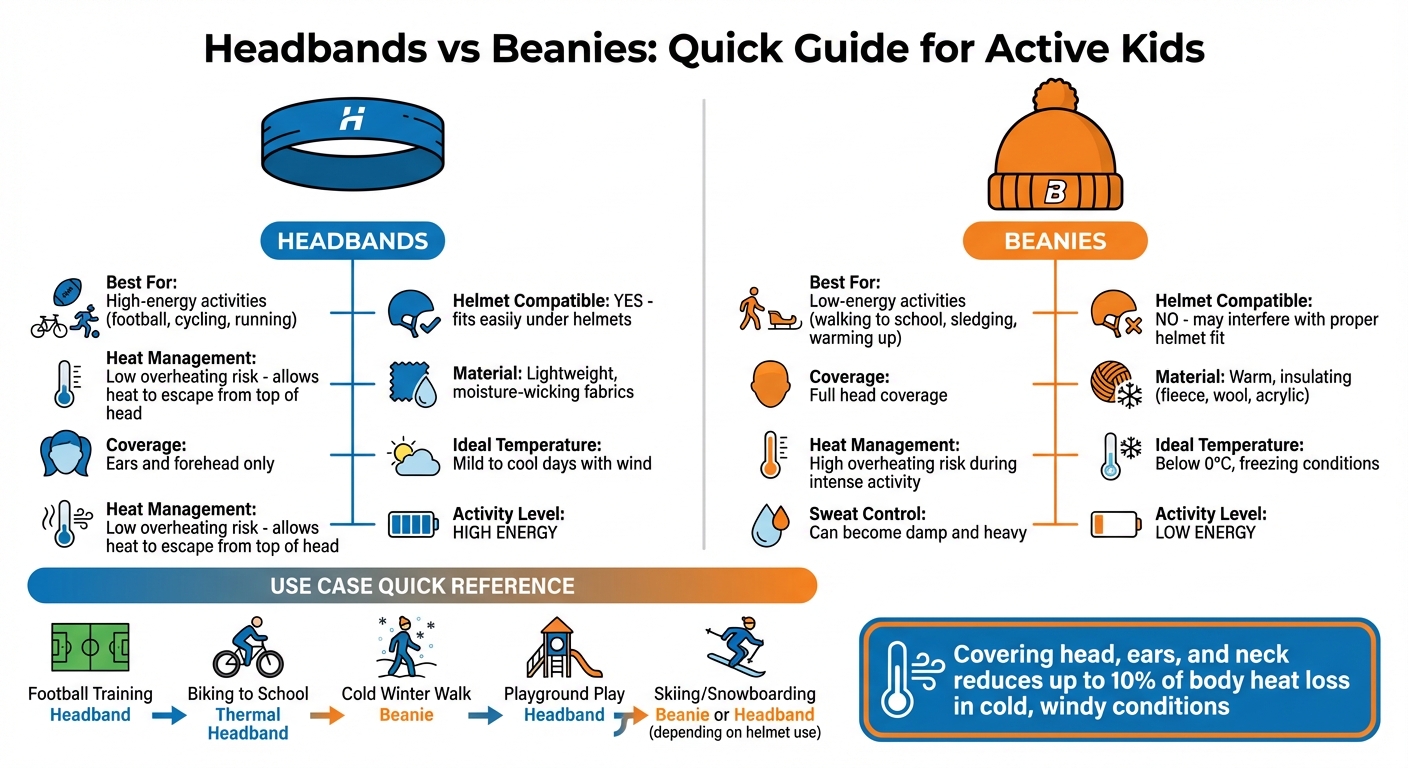
Headbands vs Beanies Comparison Chart for Active Kids
What to Consider When Choosing Headwear for Active Kids
Picking the right headwear for kids involves balancing their activity level with the ever-changing UK weather. A beanie that’s perfect for a casual walk might leave them overheated during a football match, while a cycling headband might not provide enough warmth when things slow down. Let’s break down how activity levels and weather conditions play a role in headwear selection.
Activity Levels and Weather Conditions
Active kids generate plenty of body heat during sports like running, cycling, or football. In these situations, headbands are a great choice - they leave the top of the head exposed, preventing overheating. On the other hand, beanies, which offer full coverage, are better for low-energy activities or when it’s freezing outside, as they help retain body heat.
The UK’s weather is famously unpredictable, with cool, damp, and windy conditions being the norm. Even on milder days, windchill can be an issue, especially during outdoor play. Windproof headbands are ideal for protecting the ears without causing overheating. For truly cold days, thermal beanies or skull caps offer full-head warmth.
Sweat is another factor to consider. Headbands are great at soaking up sweat before it drips into the eyes, while beanies can sometimes become heavy and uncomfortable if they absorb too much moisture. This highlights the importance of choosing the right fabric for the activity.
Comfort and Fabric Properties
Comfort often comes down to fabric. Materials like Merino wool and brushed fleece are soft, breathable, and moisture-wicking - qualities that are essential for active play . Lightweight polyester or spandex blends are better suited for high-intensity activities, while fleece or wool works well for slower-paced play in cold weather.
As fabric expert Yashvi Jain notes:
fleece material offers softness and warmth while remaining breathable, making it popular for sports-related and outdoor beanies.
In damp environments, Merino wool stands out because it keeps its insulating properties even when wet.
Windproofing is another key feature. Dense knit fabrics or headwear with engineered windproof panels shield ears from the wind. Features like four-way stretch and pre-shaped panels also ensure the headwear stays in place comfortably, even during vigorous activity.
Practicality and Fit
For kids who are always on the move, practicality and fit are non-negotiable. If your child wears a helmet for cycling, skating, or skiing, bulky beanies can be a problem. Chris from Ti-GO Sport explains:
A thermal headband is a brilliant solution because it slips under their helmet without adding bulk. It keeps their ears warm while still allowing airflow, so they won't overheat.
Thin skull caps and low-profile headbands are specifically designed to work with helmets, offering warmth without compromising on safety.
Hair type can also influence fit. Kids with thick or long hair might find full-coverage beanies restrictive or prone to slipping during active play. British Cycling offers this advice:
if you've got plenty of hair or tend to get a hot head, a headband that just covers your ears is a good alternative.
Headbands are often easier for kids to adjust themselves, while beanies may need more frequent repositioning to stay in place.
For unpredictable weather, versatility is a bonus. Multi-tube accessories, like Buffs, can be worn as headbands during high-energy activities or pulled up into hats when the pace slows down. This flexibility allows kids to adapt to changing conditions without needing multiple pieces of gear.
Headbands for Active Kids
Design and Suitability for Activities
Headbands strike a perfect balance between keeping kids warm and preventing overheating. By covering the ears and forehead, they shield against chilly winds, while the open-top design allows heat to escape. This thoughtful design avoids the discomfort of full-coverage hats, making headbands an excellent choice for activities like football or cycling, where staying cool matters.
In the UK's unpredictable weather, headbands are a practical option for breezy yet mild days when a beanie might feel too warm, but bare ears would be left exposed to the wind. They're particularly effective for high-energy activities, where kids generate plenty of body heat. This makes them a go-to accessory for keeping young ones comfortable and focused during active play.
Comfort and Performance
Headbands are more than just practical - they're designed to keep kids comfortable during movement. They absorb sweat before it drips into the eyes, a common annoyance during sports. Using moisture-wicking fabrics, they draw perspiration away from the skin, helping children stay dry and focused.
For kids who wear helmets while cycling or skating, headbands fit snugly underneath without adding extra bulk. They’re also a blessing for children with longer hair or ponytails, keeping hair neatly out of their faces without the need for a full hat. Thanks to their stretchy material, headbands stay securely in place, even during the most energetic activities.
Comfy Headbands Features

Comfy Headbands are tailored for kids aged 7 to 14 who are always on the move. Made from soft, stretchy, and durable fabric, they provide reliable ear protection while staying firmly in place during outdoor play and sports. They’re designed to accommodate all kinds of hairstyles and fit comfortably under helmets when needed.
Available in five vibrant colours - black, blue, grey, orange, and red - these headbands combine style with practicality. At £9.99, they’re affordable and versatile. Letting kids pick their favourite colour can make them more excited to wear headgear, especially if they’re usually reluctant. The lightweight design ensures they’re barely noticeable, making them perfect for everything from morning jogs to after-school football matches in classic British weather.
Beanies for Active Kids
While headbands are great for high-energy activities, beanies are the go-to for colder, less active situations.
Design and Insulation
Beanies are all about keeping the head warm. They provide full coverage, trapping heat to protect against freezing temperatures. Many feature fleece linings for extra warmth and are made from soft, stretchy materials like wool or acrylic, ensuring they’re cosy and non-itchy for kids.
In the UK, where winters bring icy winds and snow, beanies are essential for shielding little ears from the chill. Some performance beanies even include wind- and water-resistant membranes, which are perfect for keeping dampness at bay and avoiding those dreaded cold headaches caused by icy gusts sneaking through helmet vents. Wool, a natural fibre, is especially handy - it retains its warmth even when wet, making it a great choice for Britain’s often damp winters.
Breathability and Overheating Risks
While beanies are champions at keeping kids warm, they can sometimes cause overheating during intense activities like running, football, or cycling. Sweat can build up, and if it cools, kids might feel even colder once they stop moving.
"Avoid cotton, which traps moisture and can leave you feeling damp and chilled." – Aaron H. Bible, Gear Expert
In the UK’s damp winter weather, managing moisture is just as important as staying warm. Wet fabrics lose their insulating properties, increasing the risk of chills. For active kids, look for beanies made with moisture-wicking materials or those with mesh panels for better heat regulation. Merino wool is a standout option - it stays warm even when damp and naturally resists odours.
So, while beanies are fantastic for warmth, they might not be the best choice for high-energy activities.
Practical Fit and Usage
Beanies shine during low-intensity activities like walking to school, standing on the sidelines, or warming up before sports. They’re also perfect for keeping kids cosy before and after activities when they’re not moving around much. However, they can sometimes interfere with helmets or certain hairstyles, making them less ideal for high-motion activities.
For situations requiring head protection, a thin "skull cap" or an under-helmet beanie with flatlock seams can prevent discomfort and pressure points. Casual beanies with pom-poms or chunky knits are better suited for helmet-free moments. In short, beanies are best for low-energy activities or when helmets aren’t needed.
sbb-itb-72f10bf
Headbands vs Beanies: Direct Comparison
Warmth and Temperature Regulation
Beanies are the go-to option for keeping warm in freezing conditions. They cover your entire head, ears, and even the nape of your neck, helping to minimise heat loss. In fact, covering these areas can reduce up to 10% of body heat loss when it's cold and windy outside. This makes them ideal for temperatures below 0°C.
Headbands, on the other hand, take a different route. They leave the crown of the head exposed, allowing heat to escape naturally. This feature is particularly useful for active kids who need to stay cool during high-energy play. For a bit of both worlds, fleece-lined thermal headbands provide excellent ear coverage while still allowing the scalp to breathe, striking a balance between warmth and ventilation.
"Head insulation is one of the most effective ways to maintain core temperature in cold environments. Full-coverage headwear outperforms partial solutions in static or low-movement conditions." – Dr. Lena Peterson, Bioclimatologist at the Arctic Health Research Center
This difference in thermal properties directly impacts comfort during physical activity, as discussed below.
Comfort and Practicality During Activities
When it comes to active play, comfort and practicality are just as important as warmth. For high-energy activities, headbands shine. They excel at absorbing sweat, keeping it from running into the eyes during sports like football or while running around. Plus, their lightweight design ensures they stay comfortable and barely noticeable.
Beanies, however, can trap heat and cause overheating during vigorous movement. Sweat buildup inside can lead to discomfort and even a residual chill once activity stops. For sports requiring helmets - like cycling or skiing - thin thermal headbands are a perfect fit. They slide under helmets without compromising fit or safety, unlike bulkier beanies that simply don’t work in such scenarios. Comfy Headbands, for instance, are designed to stay securely in place while shielding ears from harsh winds during intense play.
Use-Case Matrix
Here’s a quick guide to help you choose the right headwear for different activities:
| Scenario | Best Choice | Why? |
|---|---|---|
| Football Training | Headband | Absorbs sweat effectively and prevents overheating during constant running |
| Biking to School | Thermal Headband | Fits comfortably under a helmet and protects ears from windchill |
| Cold Winter Walk | Beanie | Provides full insulation for low-intensity activity in cold weather |
| High-Energy Playground Play | Headband | Stays in place during movement and ensures proper ventilation |
| Skiing/Snowboarding | Beanie or Headband | Beanies offer maximum warmth; headbands are great if you're wearing a helmet |
Choosing the Best Option for Your Child
When deciding on headwear for your child, it's all about balancing their activity level, the weather, and their comfort. For active play, a headband is great for managing sweat and avoiding overheating. On the flip side, for those freezing, windy days below 0°C, a snug beanie is the way to go - it helps lock in warmth and shields little ears from the biting cold.
Since no two days (or kids) are the same, it often makes sense to have both options at hand. For those "in-between" days - when it's chilly, but your child is running around - a fleece-lined headband might just be the perfect compromise. It offers ear protection similar to a beanie but with better ventilation, which is ideal for kids on the move. One great example is the Comfy Headbands, priced at £9.99. They’re designed to stay put during energetic play while keeping ears shielded from the wind.
Of course, it's not just about performance. The design and feel of the headwear play a big role in whether your child will actually wear it. Look for soft, non-itchy materials and fun, kid-friendly designs that they'll love. For children with long hair, headbands with ponytail openings are a thoughtful feature - they prevent discomfort without sacrificing warmth. Also, consider how the headwear fits with other gear. For instance, thin headbands are great for wearing under helmets, ensuring a proper fit while still providing warmth.
Ultimately, the "best" headwear depends on the season, the activity, and how active your child is. By keeping both a moisture-wicking headband and a warm beanie on hand, you'll be ready for whatever the weather - or your child - throws your way.
FAQs
What’s the best headwear for kids playing outdoor sports in cold weather?
When it comes to keeping active kids warm in chilly weather, a beanie is a great choice. It helps shield their head and ears from the cold while offering insulation against wind and rain. Opt for one made from wind-resistant and water-repellent materials that also allow moisture to escape. This ensures they stay comfortable during activities like football, rugby, or athletics.
If your child needs to wear a helmet - for cycling, skiing, or skateboarding - a thin, fleece-lined headband is a smart alternative. These headbands are lightweight and breathable, providing just enough warmth for their ears without creating bulk. They’re designed to fit comfortably under helmets, so kids can stay warm and protected without compromising on safety.
For the best of both worlds, consider having both options on hand: a snug beanie for general outdoor fun and a performance headband for helmeted sports. This way, your child can enjoy their winter adventures while staying warm, comfortable, and ready for action.
How do headbands help keep kids comfortable during outdoor activities?
Headbands crafted from moisture-wicking fabrics are a game-changer when it comes to managing sweat during active play. These materials work by pulling sweat away from the scalp and spreading it across the fabric, allowing it to evaporate faster. This keeps the forehead and hairline dry, stopping sweat from trickling into the eyes or soaking the hair. The result? Less irritation, clearer vision, and more focus - perfect for kids running, climbing, or playing their favourite sports.
A good fit is key to making sure the headband stays securely in place, forming a barrier that channels sweat away from the face. Many modern options, such as those in the Comfy Headbands range, come with clever additions like elastic edges or silicone grips. These features help the headband stay put, even during the most energetic activities, keeping kids comfortable and free from distractions as they play.
Are beanies suitable to wear under helmets?
When it comes to wearing a beanie under a helmet, it’s not the best idea. Beanies can add unnecessary bulk, which can make the helmet sit awkwardly or feel unstable. This can affect both comfort and safety. On top of that, the extra layer of insulation can cause you to overheat, particularly if you’re engaging in active sports or outdoor activities for long periods.
