


Choosing the right headband material can make all the difference for your child’s comfort and performance. Cotton is soft, breathable, and gentle on sensitive skin, but it absorbs moisture and becomes heavy when wet. Polyester, on the other hand, wicks sweat away, dries quickly, and is more durable, making it ideal for intense activities. Here's a quick breakdown:
- Cotton: Best for light activities in warm, dry conditions. Soft and hypoallergenic but retains moisture and loses shape over time.
- Polyester: Perfect for high-energy sports and wet or cold weather. Moisture-wicking, quick-drying, and resistant to wear and tear.
Quick Comparison:
| Feature | Cotton | Polyester |
|---|---|---|
| Breathability | Very good when dry | Moderate |
| Moisture-Wicking | Poor; absorbs sweat | Excellent; repels moisture |
| Drying Speed | Slow; stays wet for hours | Fast; dries in under 30 minutes |
| Durability | Prone to fading and shrinking over time | Highly resistant to wear and stretching |
| Best For | Casual play, yoga, or sensitive skin | Sports, outdoor activities, and wet weather |
For casual use or sensitive skin, go for cotton. For active kids or unpredictable weather, polyester is the better choice.
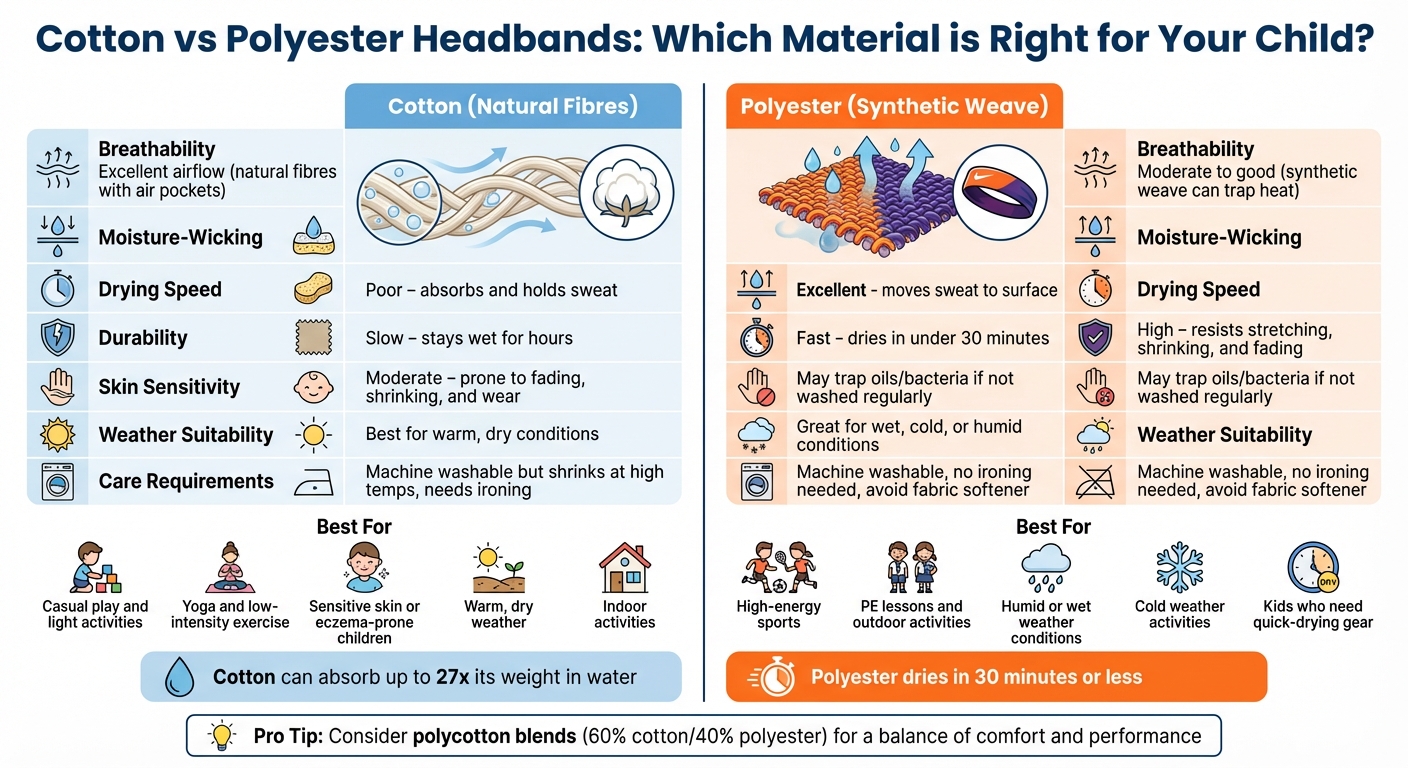
Cotton vs Polyester Headbands: Complete Material Comparison Chart
Cotton Headbands: Features and Performance
Cotton, with its natural fibres, offers a soft and gentle touch, making it an excellent choice for children or anyone with sensitive skin, including those prone to eczema. Its hypoallergenic nature helps minimise irritation, while its porous structure allows air to flow freely, preventing that uncomfortable, stuffy feeling. Let’s take a closer look at how cotton performs in key areas.
Breathability and Comfort
Cotton fibres naturally contain tiny air pockets, which help release heat effectively when the material is dry. This makes cotton headbands a great option for light activities like casual play or yoga, where they provide a cooling effect through evaporation. That said, cotton’s high absorbency - it can hold up to 27 times its weight in water - means it can become heavy and lose breathability during more intense activities where sweating is significant.
Durability and Care Requirements
One of the most practical aspects of cotton headbands is that they are easy to care for. They can be tossed into the washing machine with standard detergent, which is a lifesaver after messy outdoor adventures. However, cotton does have its quirks. The fabric has low elasticity, so it creases easily and may need ironing at high temperatures to look neat again. Additionally, cotton is prone to shrinking when washed or dried at high temperatures. To preserve its size and shape, air-drying or using the lowest heat setting is recommended. Over time, cotton headbands might fade and lose their shape, but there’s a silver lining - repeated use often makes the fabric softer and even more comfortable.
Performance in Different Weather Conditions
Cotton’s weather adaptability is another point worth noting. It excels in hot, dry climates, where its moisture absorption can provide a cooling effect. The hollow fibres also offer a touch of insulation in cooler, dry conditions, making it a decent choice for mild weather. However, cotton falls short in cold, wet conditions. When it gets wet, the fabric becomes heavy, loses its insulating properties, and can even contribute to a dangerous drop in body temperature. For this reason, cotton headbands are best suited for light activities in dry conditions where excessive sweating or exposure to wet weather is unlikely.
Polyester Headbands: Features and Performance
Polyester offers a modern solution for activewear needs. As a synthetic fibre, it’s designed to handle the demands of constant movement. Unlike cotton, which absorbs moisture, polyester works differently - it moves sweat away from the skin to the outer surface of the fabric, where it evaporates almost immediately. This makes it a great choice for children who are always on the go, whether they’re playing football, cycling, or participating in PE lessons. Its standout feature lies in its ability to manage moisture effectively.
Moisture Management and Quick Drying
One of polyester’s standout qualities is its moisture-wicking capability. Instead of soaking up sweat like cotton, polyester actively repels moisture, pulling it away from the skin and allowing it to evaporate quickly. In fact, polyester headbands can dry in 30 minutes or less. For parents, this means less downtime after washing - the headband is ready to go again in no time. A quick care tip: avoid using fabric softeners when washing polyester, as they can block the tiny pores that make moisture-wicking possible. Washing with cool water also helps maintain the fabric’s performance.
Built to Last
Polyester is known for its durability. Its fibres are resistant to tearing, stretching, and abrasion, making it ideal for active kids. As Declan Osborn from PCIAW explains:
"Polyester is a resilient material that can withstand a lot of wear without shrinking, fading, and stretching".
Since the fabric is heat-set, it keeps its shape even after multiple washes and doesn’t need ironing. Unlike cotton, which can fade over time, polyester holds dye exceptionally well and resists UV rays. This means the headband stays vibrant and fits securely, even with frequent use, offering excellent long-term value. These qualities make polyester a reliable option for outdoor adventures and changing weather conditions.
Adapting to Weather Conditions
Polyester’s moisture-repelling nature makes it great for various weather scenarios. In humid or wet conditions, it doesn’t get waterlogged and heavy like cotton. Its lightweight design helps prevent discomfort and keeps kids warm in cold, wet weather. However, in cold, dry climates, polyester can sometimes generate static electricity, which might feel a bit uncomfortable for some children. While many polyester fabrics are treated to resist odours, the synthetic weave can occasionally trap oils and bacteria if not washed thoroughly. Regular laundering is key to keeping the headband fresh.
sbb-itb-72f10bf
Cotton vs Polyester: Direct Comparison
After reviewing the performance of each material, let’s put them side by side. This comparison will help you decide which fabric suits your child’s activities and needs the best.
Performance Comparison Table
| Feature | Cotton | Polyester |
|---|---|---|
| Breathability | Excellent airflow due to natural fibres | Moderate to good airflow; knit can trap heat |
| Moisture-Wicking | Poor; absorbs and holds onto moisture | Excellent; moves sweat to the surface |
| Drying Speed | Slow; stays wet for hours | Fast; dries in 30 minutes or less |
| Durability | Moderate; prone to wear and tear | High; resists stretching and shrinking |
| Weather Suitability | Best for warm, dry conditions | Great for wet, cold, or humid conditions |
When to Choose Each Material
The table highlights the strengths and limitations of both fabrics, making it easier to match them to specific situations.
Cotton is an excellent choice for casual wear and low-intensity activities like yoga or a relaxed play session in the garden on warm, dry days. If your child has sensitive skin, cotton is often the gentler option. On particularly hot days, a damp cotton headband can even help cool them down through evaporation.
Polyester, on the other hand, shines during high-energy activities like football, running, or PE lessons. Its moisture-wicking and quick-drying properties make it a reliable option in humid or cold weather. Plus, polyester’s ability to dry quickly is a practical advantage for kids on the go.
Keep in mind that cotton’s tendency to retain moisture can make it less suitable for cold conditions, as wet fabric can lower body temperature. For outdoor winter activities, polyester is the better choice, helping to keep your child dry and comfortable.
Choosing the Right Headband Material
When picking the perfect headband for your child, it's essential to consider their activities and the environment they'll be in. Different materials excel in different situations, so understanding their strengths can make all the difference.
For high-energy activities like football, tennis, or running, polyester is a great option. Its moisture-wicking properties help keep the headband light and comfortable, even during intense workouts. On the other hand, cotton is better suited for low-sweat activities like yoga or casual play in the garden, as it doesn't handle moisture as effectively.
If your child has sensitive skin, cotton is a safe choice thanks to its natural hypoallergenic qualities. However, polyester stands out for its durability, maintaining its shape and colour even after frequent washes. This makes it a reliable option for kids who are always on the move.
In damp or chilly conditions, there's a notable difference between the two materials. Wet cotton loses its ability to insulate, potentially causing chills. In contrast, polyester dries quickly and remains lightweight, making it a practical choice for the unpredictable British weather.
For a balance of comfort and performance, polycotton blends (usually 60% cotton and 40% polyester) offer the softness of cotton with improved moisture control and durability. This combination works well for highly active children.
One tip for maintaining polyester headbands: avoid using fabric softeners during washing. These can block the tiny pores that enable moisture-wicking, reducing the material's effectiveness.
FAQs
What are the key advantages of polyester headbands for children's sports activities?
Polyester headbands are an excellent option for children's sports because they are light, sturdy, and dry quickly. Their ability to wick away moisture effectively means sweat stays managed, helping kids remain comfortable and focused while being active.
Another perk of polyester is how easy it is to maintain. It holds its shape and colour even after repeated washes, making it a dependable and hassle-free choice for kids who are always on the move.
How does cotton's ability to absorb moisture impact its suitability for different weather conditions?
Cotton is known for its high absorbency, allowing it to soak up sweat and moisture with ease. While this can feel pleasant and cosy in cooler weather, it’s not always the best choice in hot or humid conditions. The fabric tends to hold onto moisture, drying slowly, which can leave it feeling damp or heavy - especially during active play.
For kids running around outdoors or playing sports, this characteristic might make cotton less practical in warm climates. In such cases, quicker-drying fabrics like polyester may be a better option for keeping them cool and comfortable.
How can I care for polyester headbands to keep them in good condition?
When it comes to keeping your polyester headbands in great shape, a little care goes a long way. Wash them on a gentle cycle with the temperature set to 30°C or lower, and turn them inside-out to minimise wear and tear. Skip the tumble dryer - high heat can harm the fibres. Instead, let them air dry naturally. If you want them to feel extra soft, add a small amount of fabric conditioner. Just make sure not to overload the washing machine, so everything gets cleaned properly.
