


When it gets cold, keeping kids warm without making them uncomfortable can be tricky. Headbands are a simple way to protect their ears and foreheads from wind and cold, especially during active play like cycling or running. They’re lightweight, fit under helmets, and don’t trap heat like hats. Plus, with so many designs available, kids are more likely to wear them without complaint.
Here’s what you need to know:
- Why they’re useful: Protect ears from windchill, manage sweat, and stay breathable during activities.
- What to look for: Materials like fleece or merino wool for warmth and moisture-wicking. Ensure a proper fit for comfort and no slipping.
- Care tips: Wash gently, air-dry flat, and avoid harsh detergents to maintain quality.
- Style options: Bright colours, fun patterns, and sporty designs make them appealing to kids.
Headbands are a practical, affordable (£9.99 options are available) addition to any winter wardrobe, helping kids stay warm and comfortable while enjoying outdoor activities.
Why Kids Need Headbands in Cold Weather
Protection Against Cold and Wind
Children's ears and foreheads don’t have much natural insulation, making them especially sensitive to cold weather and biting winds. This becomes even more noticeable when they’re cycling, running, or playing outdoors, as the windchill effect amplifies the cold on their exposed skin. Unlike staying still, these activities mean cold air hits harder, particularly around the ears. A good headband can shield these vulnerable areas, keeping the wind out while being slim enough to fit comfortably under helmets for activities like cycling or horse riding. This ensures safety isn’t compromised.
Take the Performa Ride Ear Warmer as an example. With a 4.83 out of 5 rating based on 6 customer reviews, it’s clear that targeted protection works. Customers praise its ability to provide warmth without bulk, making it perfect for winter riding. Beyond just blocking the wind, a well-made headband also addresses another cold-weather challenge: managing moisture during active play.
Moisture Management and Breathability
When kids are active, their foreheads sweat - even in colder weather. If this sweat isn’t managed, it can cool down during breaks, causing discomfort. Headbands made with moisture-wicking fabrics solve this problem by pulling sweat away from the skin, preventing it from turning cold. Unlike hats, which can trap heat and feel stuffy, headbands leave the top of the head uncovered. This design lets excess warmth and moisture escape while still keeping the ears and forehead protected. Fleece-lined options are especially effective, offering a balance of warmth and airflow. This combination makes headbands a go-to for various sports and outdoor activities.
Suitable for Different Outdoor Activities
Headbands shine in a wide range of cold-weather activities. For sports like cycling, skiing, and snowboarding, they provide essential ear protection while fitting snugly under helmets.
They’re also great for high-energy pursuits like running, playground games, or competitive sports, where breathability is key. Unlike beanies, headbands don’t trap excessive heat, making them ideal for staying comfortable during intense activity. Even for general outdoor play - whether hiking, building snowmen, or enjoying school breaks - headbands offer a practical, adjustable solution. On milder winter days or when the wind picks up, they strike the perfect balance between keeping kids warm and regulating temperature.
sbb-itb-72f10bf
What to Look for When Choosing a Kids' Headband
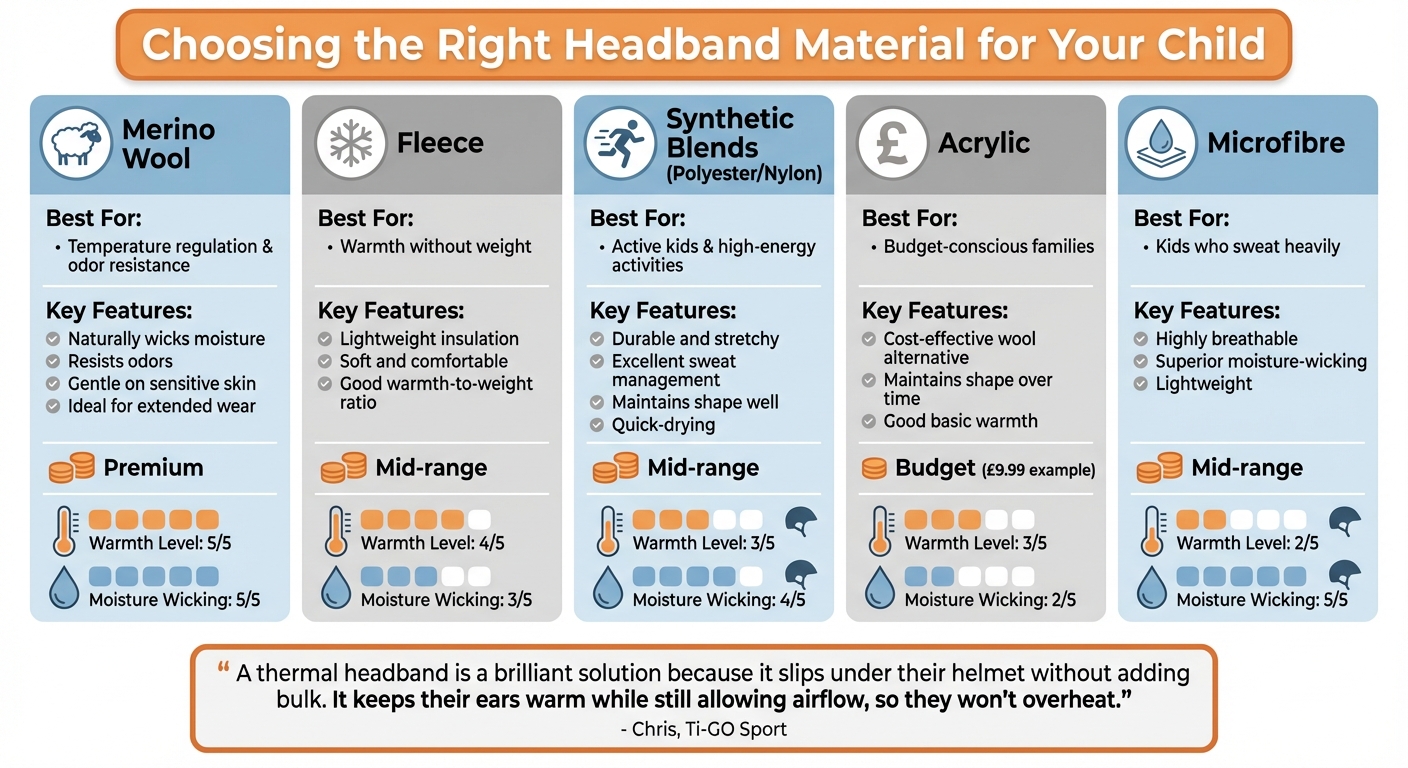
Kids' Headband Materials Comparison Guide for Cold Weather
Material and Fabric Quality
When picking a headband for kids, the fabric plays a huge role in comfort and functionality. Merino wool is a standout option. It naturally regulates temperature, wicks moisture, and resists odours - even after multiple uses. Plus, it’s gentle on sensitive skin, making it ideal for extended wear. Another great choice is fleece, which provides warmth without adding unnecessary weight.
For active kids, synthetic blends like polyester and nylon are excellent. These materials are tough, stretchy, and great at managing sweat during high-energy activities. If you’re on a tighter budget, acrylic offers a cost-effective alternative to wool, maintaining its shape over time. For children who sweat a lot, microfibre headbands are a smart pick - they’re breathable and wick moisture effectively.
"A thermal headband is a brilliant solution because it slips under their helmet without adding bulk. It keeps their ears warm while still allowing airflow, so they won't overheat." - Chris, Ti-GO Sport
Prices can vary based on materials, but options like Comfy Headbands offer solid performance at just £9.99. These provide excellent insulation and durability, making them a practical choice. Additionally, for outdoor sports like cycling or running, look for headbands with wind-blocking features to protect ears from the chill.
Once you’ve chosen the material, make sure the headband fits properly to avoid slipping or discomfort.
Proper Fit and Sizing
Getting the right size is key to ensuring the headband stays put during active play. Measure your child’s head circumference just above the eyebrows and ears. Sizes generally range from 51–55 cm for ages 7–10, and 55–60 cm for older kids. A headband that’s too loose or too tight can cause it to slip or feel uncomfortable. Look for designs with adjustable straps or grips at the back to keep the headband secure during movement.
Design Features for Active Play
Once you’ve nailed the materials and sizing, it’s time to focus on features that make the headband practical for sports and outdoor fun.
For winter sports or cycling, helmet compatibility is a must. Slim, low-profile headbands made from lightweight materials like merino wool or microfibre fit comfortably under helmets without compromising safety.
Cold weather calls for ear coverage. Contoured or wide-cut designs that fully cover the ears offer better wind protection than straight bands.
For outdoor activities in low light, visibility features like reflective accents or bright colours are essential for safety. Durable blends, such as merino-nylon, are also worth considering - they maintain their shape after frequent use while staying breathable to prevent overheating. Lightweight headbands designed for sports ensure comfort without adding bulk, making them ideal for active kids.
How to Care for Kids' Headbands
Washing Instructions
To keep kids' headbands fresh and well-insulated, aim to wash them 3–5 times per season. For a quick refresh between washes, spot-clean with a damp cloth - this works particularly well for wool or other delicate fabrics.
If you're using a washing machine, place the headband in a mesh laundry bag to avoid snagging. Select a wool or delicate cycle, keeping the temperature at 30°C or below, and use a low-spin setting. For hand washing, fill a basin with cool water, add a teaspoon of mild detergent, and gently swirl the headband for about 5 minutes. Avoid wringing or scrubbing, as this can stretch the fabric. Stick to non-biological detergents made for wool and natural fibres, and never use bleach - it can damage elastic and wool over time.
"You may be tempted to hold your beanie under a stream of cool water, however, this will only result in it stretching." - Laundryheap
Drying and Storage Tips
Proper drying and storage are key to maintaining the shape and quality of headbands. After washing, skip wringing or twisting. Instead, roll the headband in a clean, dry towel and press gently to remove excess water. While it's still damp, reshape it by hand to help it retain its original form.
Always air-dry headbands flat on a towel, away from direct sunlight and radiators. Avoid hanging them or using a tumble dryer, as these can cause stretching, shrinkage, or even felting. When storing, fold headbands instead of hanging them to keep their shape intact. Store them in a cool, dry spot, and for wool headbands, consider using cedar balls or lavender sachets to deter moths.
"Rule number 1, always fold your woollen items, never hang them. This is to prevent them from losing shape and to keep moths away." - JoJo Maman Bébé
Colours and Styles for Kids
Popular Colours and Patterns
Letting kids choose their own headband designs can make a big difference. Bright colours like hot pink, lavender, turquoise, and gold are often favourites among younger children. On the other hand, older kids, especially those aged 10–14, might prefer more understated winter shades, such as navy, grey, or cream. Seasonal patterns - think reindeer, gingerbread, candy canes, or snowmen - add a festive touch to winter wardrobes and make dressing for colder months more fun.
Adding embellishments can take a headband from simple to standout. Swarovski crystals, sequins, and metallic details make them feel extra special. For younger children, playful designs like gummy bear charms, unicorn motifs, or animal ears (bunny knots, for example) turn headbands into fun accessories rather than just practical winterwear. As Kurt Goodwin from Twine and Love puts it:
Headbands aren't just functional... they also add personality to your look. With the right piece, you can transform a basic outfit into something effortlessly chic.
Textures also play a role. Cosy materials like sherpa, velvet, cable knits, or even fuzzy fabrics provide warmth and a comforting feel. For sporty kids, headbands with reflective strips or team colours, such as NBA logos or football-inspired designs, can make them more appealing. Giving children the freedom to pick their own styles can also help avoid dressing battles. Ti-GO Sport explains:
Giving them the option to decide often makes them more willing to wear it without complaints.
Matching Headbands with Winter Clothing
Once you've chosen colours, patterns, and textures, it's worth thinking about how headbands fit into a complete winter outfit. For example, pairing a patterned headband - like tartan or Union Jack - with a solid-coloured coat in navy or neutral tones creates a polished look while keeping things cosy. Velvet or satin headbands work well with dressier coats, adding a touch of vintage charm for more formal occasions.
For active kids, headbands made from moisture-wicking materials are a smart choice. Sleek designs in solid colours pair perfectly with technical jackets and activewear. These styles are also thin enough to wear under helmets for cycling or skiing, combining practicality with style. Matching headbands with neck warmers (like snoods) can create a seamless barrier against the wind, keeping kids comfortable during outdoor play.
Choosing the right colours can enhance a child’s natural features too. Pastel shades like light blue or lavender flatter fair skin tones, while jewel tones such as emerald green or royal blue work beautifully with warmer or darker complexions. For blonde hair, warm tones like peach or pink provide a gentle contrast, whereas bold shades like gold or copper pop against dark hair. Comfy Headbands offers a range of colours - black, blue, grey, orange, and red - that are easy to match with most winter outfits. At £9.99 each, they’re not just versatile but also designed to stay put during active play.
Conclusion
Choosing the right headband for winter can make dressing for cold weather much easier while keeping outdoor play comfortable and enjoyable. A good headband combines quality materials, a proper fit, and appealing designs, making it simple to prepare for chilly days. When headbands provide warmth without sacrificing breathability, children can stay active, whether they're cycling or playing outside, without feeling too hot or too cold.
Materials matter. Headbands crafted from fabrics like fleece or merino wool not only shield against windchill - which can make ears sting in no time - but also allow heat to escape during energetic activities, keeping kids comfortable.
Confidence in winter gear can encourage children to embrace outdoor fun. As Chris from Ti-GO Sport puts it:
Once you've cracked the headwear game, getting them outside will be a whole lot easier, even when the clouds are threatening.
Letting kids pick from a range of colours and patterns also gives them a sense of ownership over their winter wardrobe, making them more excited to gear up for the cold.
Comfy Headbands, priced at just £9.99, offer a budget-friendly option that doesn’t compromise on quality or style. With soft, stretchy fabric that keeps ears shielded from biting winds, these headbands are perfect for everything from school runs to weekend adventures - helping kids stay active and confident all winter long.
FAQs
What are the best materials for kids' headbands to keep them warm in cold weather?
The best materials for kids' headbands in cold weather are those that combine warmth, insulation, and breathability. Wool and wool-blend fabrics stand out because they insulate well while allowing airflow. This means kids stay warm without feeling overheated. Fleece is another excellent choice, offering a soft texture and great heat retention, making it a go-to for outdoor play.
While cotton feels soft and breathable, it doesn’t provide enough warmth on its own during very cold weather. That said, it can be effective when paired with insulating layers like wool or fleece. Synthetic fabrics designed to wick moisture away can also help keep your child’s head dry and warm. For the cosiest and most practical option, stick with wool or fleece to keep your child comfortable during chilly days outside.
How can I make sure a child's headband fits properly?
To get the right fit for a child's headband, start by measuring their head circumference. Use a soft tape measure, wrapping it around the widest part of their head - just above the eyebrows and ears. Make sure it’s snug but not overly tight.
Opt for headbands made from stretchy fabrics as these provide a more comfortable fit and can accommodate growth. Many headbands include size guides based on age or specific centimetre measurements, so refer to these for the best fit. The ideal headband should stay securely in place without feeling too tight or causing any discomfort.
Why choose headbands instead of hats for active children in cold weather?
Headbands offer a smart alternative to hats for keeping kids warm during chilly months, especially when they're on the move. By focusing warmth on the ears and forehead, they help protect against the cold without covering the entire head. This design prevents overheating, making headbands ideal for activities like running, cycling, or playing sports.
Another perk? Headbands are lightweight and far less bulky than hats. This makes them easy to wear under helmets or other gear without causing discomfort. Many are made with breathable, moisture-wicking fabrics, which help manage sweat and keep kids dry - perfect for those who are constantly on the go. Combining warmth, comfort, and practicality, headbands are a great choice for outdoor adventures in cooler weather.
