


It’s frustrating when your child’s headband won’t stay in place. The main reasons this happens are:
- Incorrect fit: A headband that's too loose or tight won’t stay put.
- Hair type: Smooth or fine hair offers less grip.
- Material: Slippery fabrics like silk lack friction, especially during active play.
- Movement: Kids are always on the go, and constant motion shifts the headband.
Quick Fixes:
- Choose better materials: Opt for elastic, moisture-wicking fabrics or those with silicone grips.
- Adjustable designs: Velcro or ribbon ties allow a more secure fit as your child grows.
- Prep the hair: Use dry shampoo or hairspray to add texture.
- Position correctly: Place the headband just behind the hairline and secure with bobby pins if needed.
Headbands like Comfy Headbands (£9.99) combine stretchy, sweat-managing fabrics with grip-enhancing features, making them a reliable choice for active children.
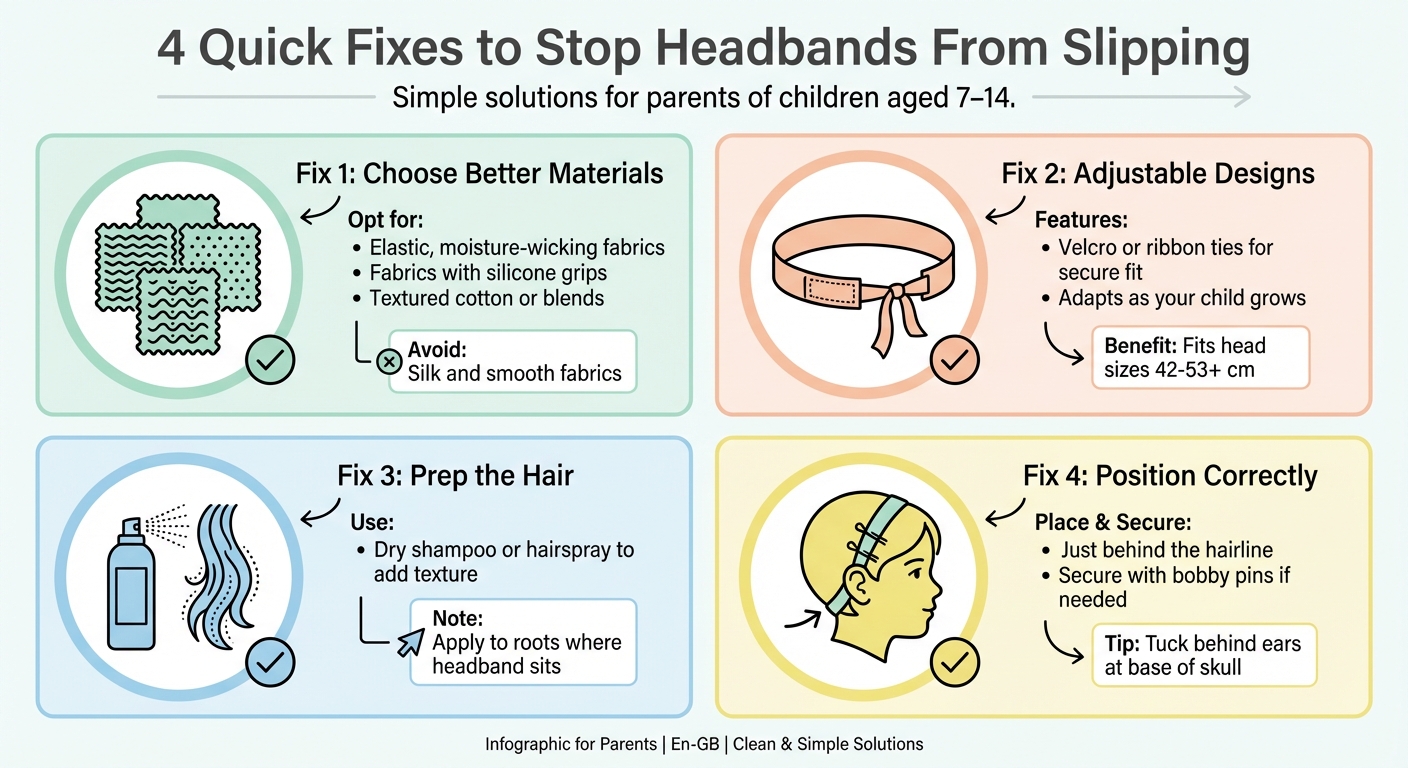
4 Quick Fixes to Stop Children's Headbands From Slipping
How to Keep Headbands on a Toddler's Head : Child & Baby Clothing
Why Headbands Slip Off Children's Heads
Headbands slipping off children's heads usually comes down to three main factors: improper sizing, unsuitable materials, and the natural challenges of active movement. Let’s take a closer look at each one.
Incorrect Fit for Your Child's Head Size
Getting the right fit is essential. Children's head sizes can range widely, from around 33 cm for newborns to 42 cm for older kids. A headband that's too loose will inevitably slide off, while one that's overly tight might ride up or even snap off. Hair type also plays a role - fine or silky hair tends to offer less grip. On top of that, differences in head shape and hairline height impact how well a headband stays put. For instance, a child with a lower hairline might benefit from a design that allows for adjustments.
Materials That Don't Work During Active Play
The fabric of a headband can make or break its ability to stay in place. Smooth materials like silk or certain types of cotton often lack the friction needed to grip hair securely. This problem becomes worse when kids are physically active, as sweat acts like a lubricant, making it easier for the headband to slip.
"Athletic headbands are specifically designed to absorb sweat and keep your hair in place during workouts or intense physical activities. They are typically made with moisture-wicking materials and have a non-slip grip to ensure they stay in place even during rigorous movements." – Mood & Mane
Choosing headbands made from materials with better grip can make a noticeable difference, especially for kids who are always on the move.
How Active Movement Causes Slippage
Children are constantly in motion - running, jumping, and playing with boundless energy. All this movement naturally shifts a headband out of position. Even environmental factors, like a light breeze, can nudge a wider headband backward, making it harder to stay in place during outdoor play.
Choosing Headbands with Better Grip
Features That Improve Grip
The right design can make all the difference between a headband that constantly slides off and one that stays put. Adding silicone or rubber-like linings to the interior is a game-changer. These materials create just the right amount of friction to keep the headband securely in place, even on finer or thinner hair types that often struggle with smooth fabrics. Pairing these textured linings with elastic materials ensures a snug fit that adjusts to different head shapes without feeling overly tight.
For kids who are always on the move, moisture-wicking fabrics play a crucial role. They help manage sweat, which could otherwise make the headband slippery during energetic activities. Wider bands - around 10 cm - tend to provide better grip overall, while thinner ones might be better suited for younger children with boundless energy.
These thoughtful grip-enhancing features are at the heart of Comfy Headbands' design approach.
How Comfy Headbands Stay in Place
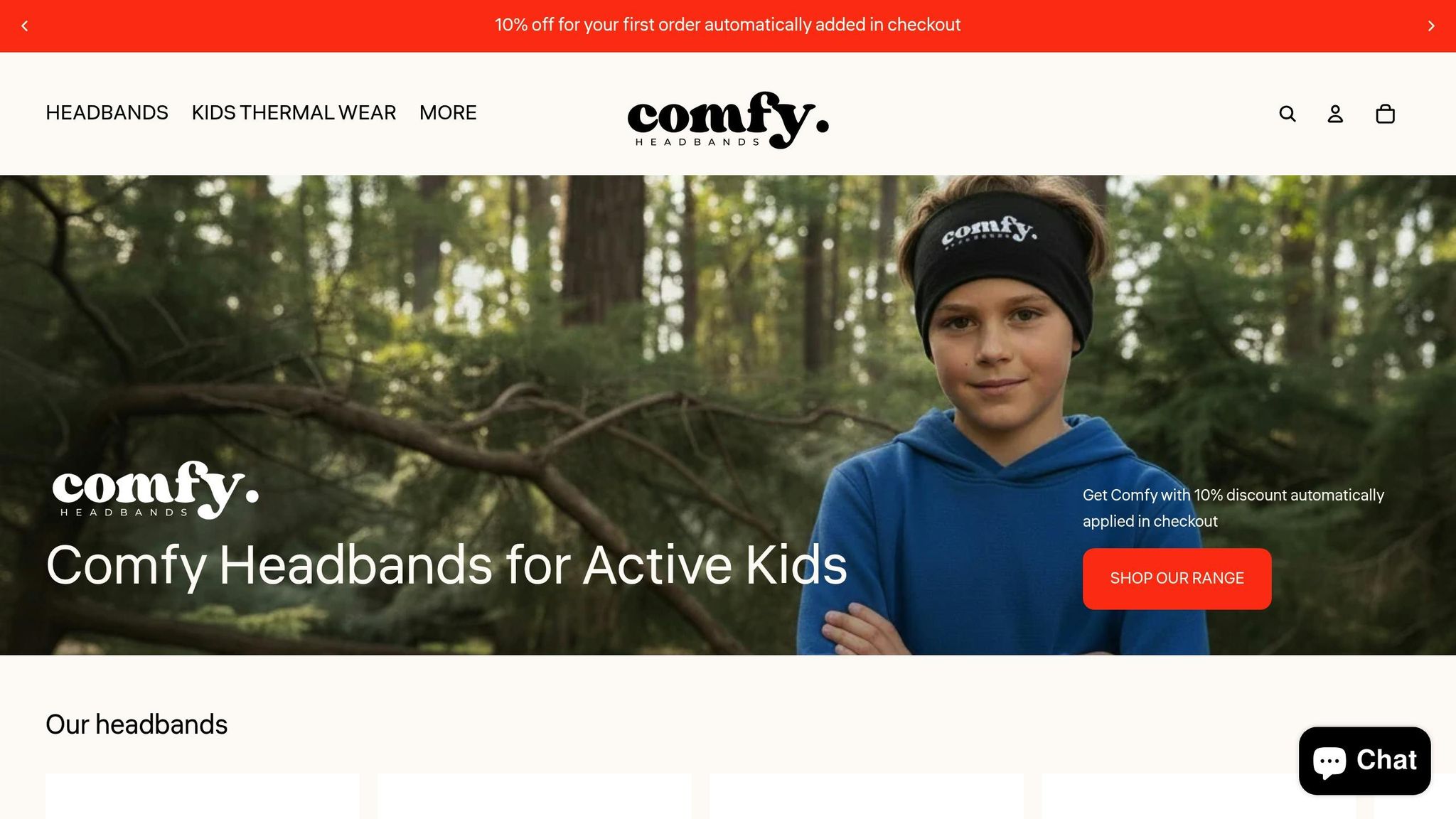
Comfy Headbands are designed with active kids in mind, combining essential features to ensure they stay firmly in place. The stretchable, moisture-managing fabric adapts comfortably to head sizes while maintaining a secure grip, even during outdoor play. Specifically tailored for children aged 7 to 14, these headbands provide a snug yet comfortable fit.
What’s more, the material retains its elasticity after multiple washes, so the headband continues to perform over time. Priced at £9.99 each, they come in a variety of colours, including black, blue, grey, orange, and red. Whether your child is dashing around the playground or sitting through a school lesson, these headbands are built to stay put and keep them comfortable.
Adjustable Designs That Prevent Slippage
Fitting Growing Children
Adjustable headbands solve the hassle of constantly replacing ill-fitting headgear. With Velcro or ribbon ties, these designs can be customised to fit as your child grows, making one headband last through various stages of development. They typically cater to head sizes ranging from approximately 42 cm to over 53 cm.
These designs are perfect for different head sizes and shapes. By simply adjusting the strap to the ideal tension, the headband stays securely in place - neither too tight to cause discomfort nor too loose to slip off during active moments. This adjustability works hand in hand with grip-enhancing features, ensuring the headband remains in place during play and other activities.
"Adjustable Headbands... feature an adjustable strap or ribbon tie for a personalised fit every time." - Headbands of Hope
Durability and Comfort in Adjustable Headbands
Beyond a secure fit, adjustable headbands are built to handle daily wear and tear while ensuring comfort. High-quality materials like sweat-resistant, moisture-wicking fabrics help these headbands maintain their shape and grip, even after frequent use. These fabrics also prevent the band from feeling heavy or slippery when your child is active and sweating on the playground or during sports.
While elastic materials might stretch over time, a quick wash and tumble dry can often restore their original fit. For added security, look for adjustable designs that include features like silicone strips or textured inner linings, which provide extra grip against the hair.
sbb-itb-72f10bf
Materials That Work for Active Children
Stretchy vs Slippery Fabrics
The type of fabric you choose for a headband plays a big role in how well it stays in place during active play. Stretchy materials like spandex, jersey, and polyester blends naturally mould to your child’s head, providing a snug fit with just the right amount of tension and friction to keep it in place.
On the other hand, slippery fabrics such as silk, satin, or smooth synthetics tend to slide around, especially on fine hair. These materials often need extra help - like bobby pins or clips - to stay put, which can be inconvenient during playtime.
"Fabric headbands excel in comfort and breathability, but their staying power diminishes if they lack internal grip technology." - Lena Torres, Product Designer at ActiveStyle Co.
For kids who are always on the move, moisture-wicking technical fabrics are a game-changer. They stay light even when wet, unlike cotton, which absorbs sweat, gets heavy, and loses its grip during intense activities. When paired with textured linings, these technical fabrics provide consistent performance, ensuring the headband stays secure no matter how active the play gets.
Materials for Cold Weather
When the temperature drops, your fabric choice needs to do more than just stay in place - it also has to keep your child warm. Headbands for outdoor winter activities should combine warmth with a reliable grip. Knitted fabrics like wool, acrylic, and cotton blends are excellent options. They stretch naturally, allow for breathability, and their textured surfaces help them stay put, even during energetic play. Plus, they shield little ears from biting winds.
Comfy Headbands offer a great option for colder months. Priced at £9.99, they are designed specifically for outdoor activities, providing the warmth needed for British winters while maintaining a secure fit for sports and playground fun. For very chilly conditions, fleece-lined versions provide extra insulation, which is especially helpful for children who find wool itchy. Technical, moisture-wicking fabrics are also a smart choice, as they manage sweat effectively, keeping the headband in place during high-energy outdoor adventures.
Tips to Keep Headbands in Place
Preparing Hair for Better Grip
If you've ever noticed a headband slipping off freshly washed hair, there's a reason for that. Smooth, clean hair often lacks the texture needed to hold accessories in place. Hair stylist Kay Burton from Soulvation explains: "Silky, smooth hair is kryptonite to your headband and it will likely fly off as soon as you look down".
To tackle this issue, try creating some grip artificially if the hair is freshly washed. A small amount of dry shampoo applied to the roots where the headband will sit can help. Brush it through gently to distribute the product. For added security, spray a touch of firm-setting hairspray on the same area and let it dry slightly to form a tacky surface before positioning the headband.
If adding texture alone isn't quite enough, pairing it with a few simple accessories can make a big difference.
Using Small Accessories for Extra Hold
Once the hair is prepped, small accessories like bobby pins can help keep headbands in place, especially during active moments. To secure the headband, slide a bobby pin behind each ear, ensuring the wavy side faces down and the tips point towards the face. For children who are particularly active, you can cross two pins in an 'X' shape at the nape of the neck for extra hold. Professional hair stylist Janet Miranda suggests: "Buy bobby pins that match the colour of your hair! That way they'll just sort of blend into your hair and they won't stick out nearly as much".
If the headband itself lacks grip, you can customise it at home. A thin, squiggly line of puffy paint or hot glue applied to the inside of the band creates a rubber-like surface. Once dry, this adds traction without sacrificing comfort.
How to Position Headbands Correctly
Proper headband placement is another crucial factor in keeping it secure. The front of the headband should rest just behind the hairline, avoiding the middle of the forehead or the smooth crown of the head. Tuck the rest behind the ears so it sits snugly at the base of the skull. Hair stylist Nicky Clarke advises: "The closer you position the headband to your hairline, the less likely it is to slip off!".
For added stability during sports or outdoor activities, try pulling the headband slightly over the tops of the ears. Brushing the hair beforehand also helps the headband sit evenly, ensuring better grip and comfort.
Conclusion
To wrap things up, keeping a headband securely in place starts with addressing the root causes: improper fit, unsuitable materials, and the challenges of active play. A few simple tweaks can make all the difference.
Choose headbands designed for better grip, like those featuring velvet linings or silicone strips, and look for adjustable options that grow with your child. Fabrics that wick away moisture can also help keep the headband steady during active moments. A quick spritz of dry shampoo or positioning the headband just behind the hairline can improve grip and reduce the need for constant adjustments.
Comfy Headbands incorporate these thoughtful design elements to provide a secure and comfortable fit, making them perfect for school, sports, and outdoor adventures.
With the right headband and these practical tips, your child can stay comfortable and focused on enjoying their day.
FAQs
How can I stop my child’s headband from slipping off their fine hair?
To keep a headband secure on fine hair, start by adding some texture at the roots. A quick backcomb or a light spritz of dry shampoo can work wonders by providing the grip needed to help the band stay put. When positioning the headband, place it just above the hairline at the front and back. This ensures the weight is evenly distributed, so you won’t need to over-tighten it.
For an extra layer of hold, try using a touch of hairspray or a dab of hair gel where the headband will sit. Put it on while the product is still slightly tacky to help it grip better. If you’re still worried about slipping, you can discreetly secure the band with a couple of bobby pins tucked behind the ears or at the base - just make sure they’re placed comfortably.
Lastly, check the size of the headband. A band that’s too tight might pop off, while one that’s too loose will inevitably slide. Look for a snug but comfy fit with about 2–3 cm of give. Adjustable or elastic styles can also be a great choice, especially for growing kids. These simple tricks should help keep the headband in place, whether it’s for a day at school, an outdoor adventure, or just some playtime.
What are the best materials for headbands to stay in place during active play?
Nylon is a great material for headbands made for active kids. It's soft and stretchy, making it gentle on sensitive skin while still providing a snug fit that moves with them as they run, jump, or climb. Thanks to its elasticity, the headband stays put, combining comfort with functionality.
For extra hold, consider headbands with features like silicone backing or textured patterns. These small additions can go a long way in keeping the headband securely in place during energetic play.
What are the benefits of adjustable headbands for children?
Adjustable headbands are a smart pick for growing children because they can be resized to match your child’s changing head size. For reference, a toddler’s head circumference is typically about 48 cm (19 inches), while older children and adults can go up to 58.5 cm (23 inches). Thanks to their adjustable design, these headbands save you from frequent replacements, making them a budget-friendly and durable choice.
They’re also designed to tackle common annoyances like slipping or pinching. An adjustable fit provides a secure yet comfortable grip, even during active moments like playtime or sports. Many styles feature stretchy materials or simple adjustment mechanisms, making them user-friendly for both kids and parents.
Another big plus is their adaptability. Adjustable headbands can accommodate changes in hair volume or style, whether your child has fine, thick, short, or long hair. This flexibility ensures they remain comfortable and practical for everyday wear.
